


On 11 February 2017, a Cessna 402 failed to stop on the runway when landing at Virgin Gorda and was extensively damaged. The Investigation noted that the landing distance required was very close to that available with no safety margin so that although touchdown was normal, when the brakes failed to function properly, there was no possibility of safely rejecting the landing or stopping normally on the runway. Debris in the brake fluid was identified as causing brake system failure. The context was considered as the Operator s inadequate maintenance practices and a likely similar deficiency in operational procedures and processes.
Description
On 11 February 2017, a Cessna 402 (N603AB) being operated by Air Sunshine on a non-scheduled 35 minute passenger flight from St Thomas, US Virgin Islands to Virgin Gorda in the British Virgin Islands in day VMC with a single pilot and eight passengers on board was involved in a runway excursion at destination. When the pilot attempted to apply the brakes after touchdown on 795 metre-long compacted fine gravel surfaced runway 03, they did not respond normally and the aircraft failed to stop on it but remained within the aerodrome perimeter after deviating left to avoid an overrun into the sea. The aircraft was extensively damaged but none of the occupants were injured.
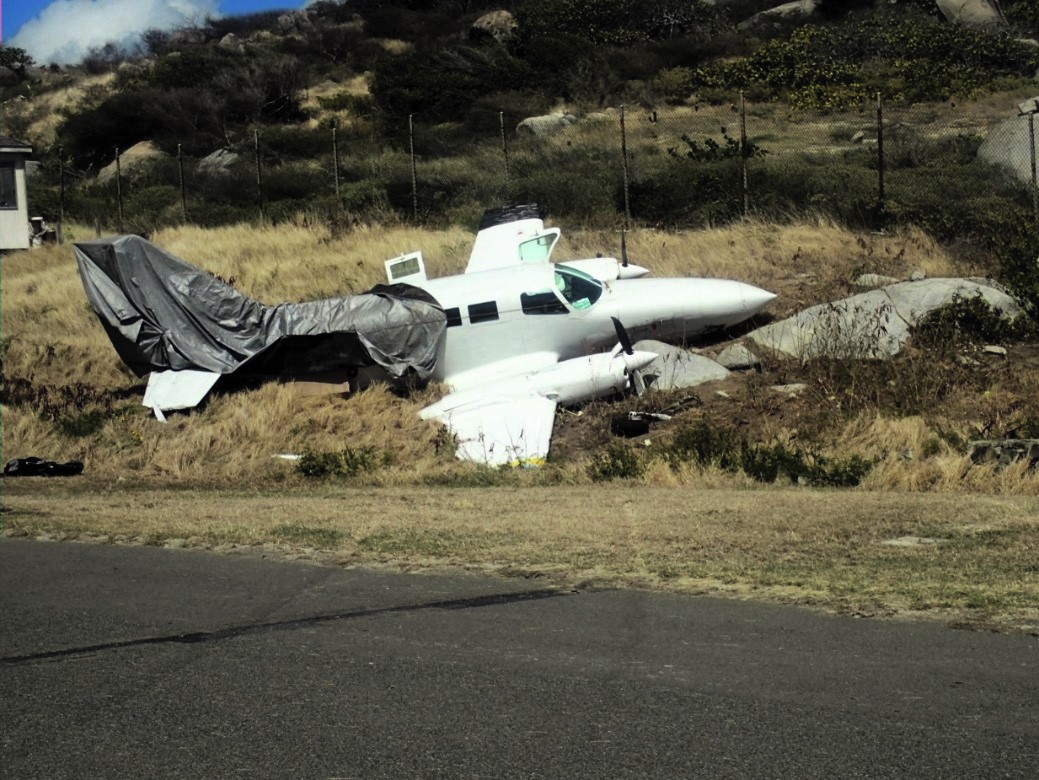
The aircraft in its final stopping position. [Reproduced from the initial Report]
Investigation
A Field Investigation was carried out by the UK AAIB under arrangements authorised by the government of this British Overseas Territory. The aircraft was not fitted with flight recorders nor was it required to be. The 29 year-old Captain had 5,458 total flying hours of which 809 hours were on type and he had completed over 800 landings at Virgin Gorda, which is a PPR ‘special conditions’ airport, during the 12 months prior to the accident.
The full content of this page is available to registered users only. Please Log in or Register