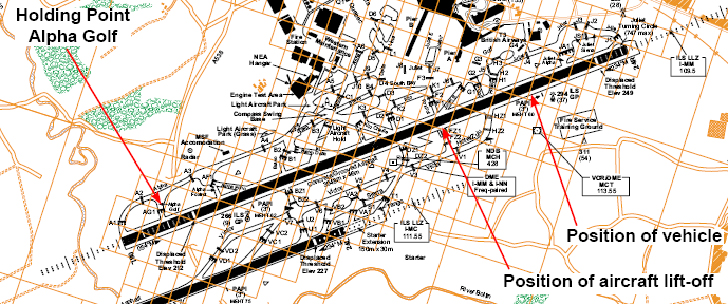



On 16 July 2003, a Boeing 737-800, being operated by Excel Airlines on a passenger flight from Manchester to Kos began take off on Runway 06L without the flight crew being aware of work in progress at far end of the runway. The take off calculations, based on the full runway length resulted in the aircraft passing within 56 ft of a 14 ft high vehicle just after take off.
Description
On 16 July 2003, a Boeing 737-800, being operated by Excel Airlines on a passenger flight from Manchester to Kos began take off on Runway 06L without the flight crew being aware of work in progress at far end of the runway. The take off calculations, based on the full runway length resulted in the aircraft passing within 56 ft of a 14 ft high vehicle just after take off. The event was not reported - by ATC - until a week later.
[…]Runway 06L was in use but the flight crew were not aware that this runway was being operated at reduced length. This was due to work-in-progress to remove rubber deposits at the far end of the runway, which was out of sight from the 06L threshold end as the runway is built over a slight rise in the ground. Due to a difference in interpretation of information passed between Air Traffic Control (ATC) and the flight crew, the aircraft entered the runway from holding point AG, rather than the expected holding point A (Figure 1), and the takeoff was conducted using a reduced thrust setting calculated for the assumed normal runway length. As the aircraft passed the crest of the runway, the flight crew became aware of vehicles at its far end but, as they were now close to their rotation speed, they continued and carried out a normal takeoff. The aircraft passed within 56 ft of a 14 ft.
The full content of this page is available to registered users only. Please Log in or Register